
MA
OKATECH Mandarin
- Mesh finish
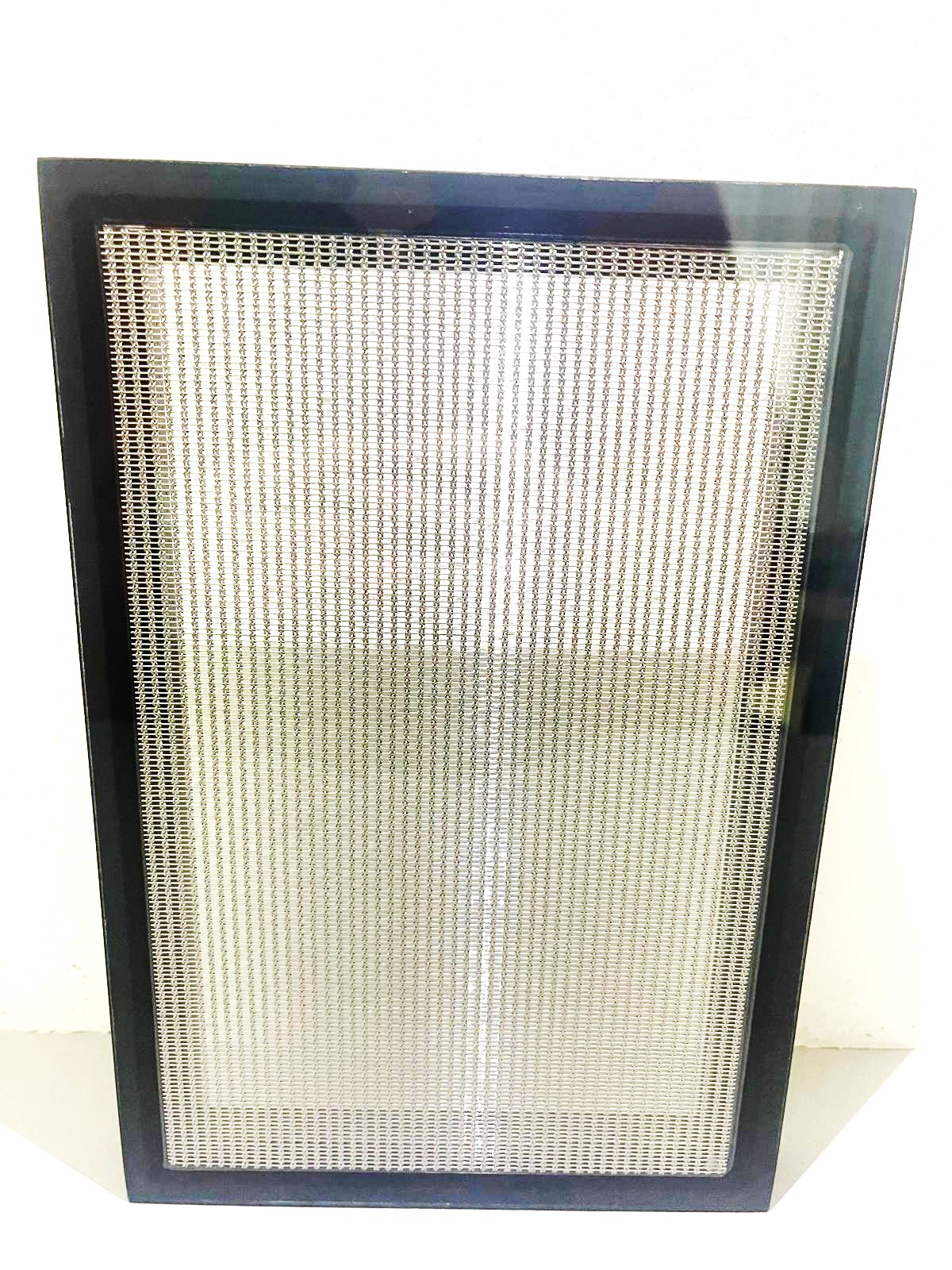
- Mandarin · woven brass · Germany
- Pattern
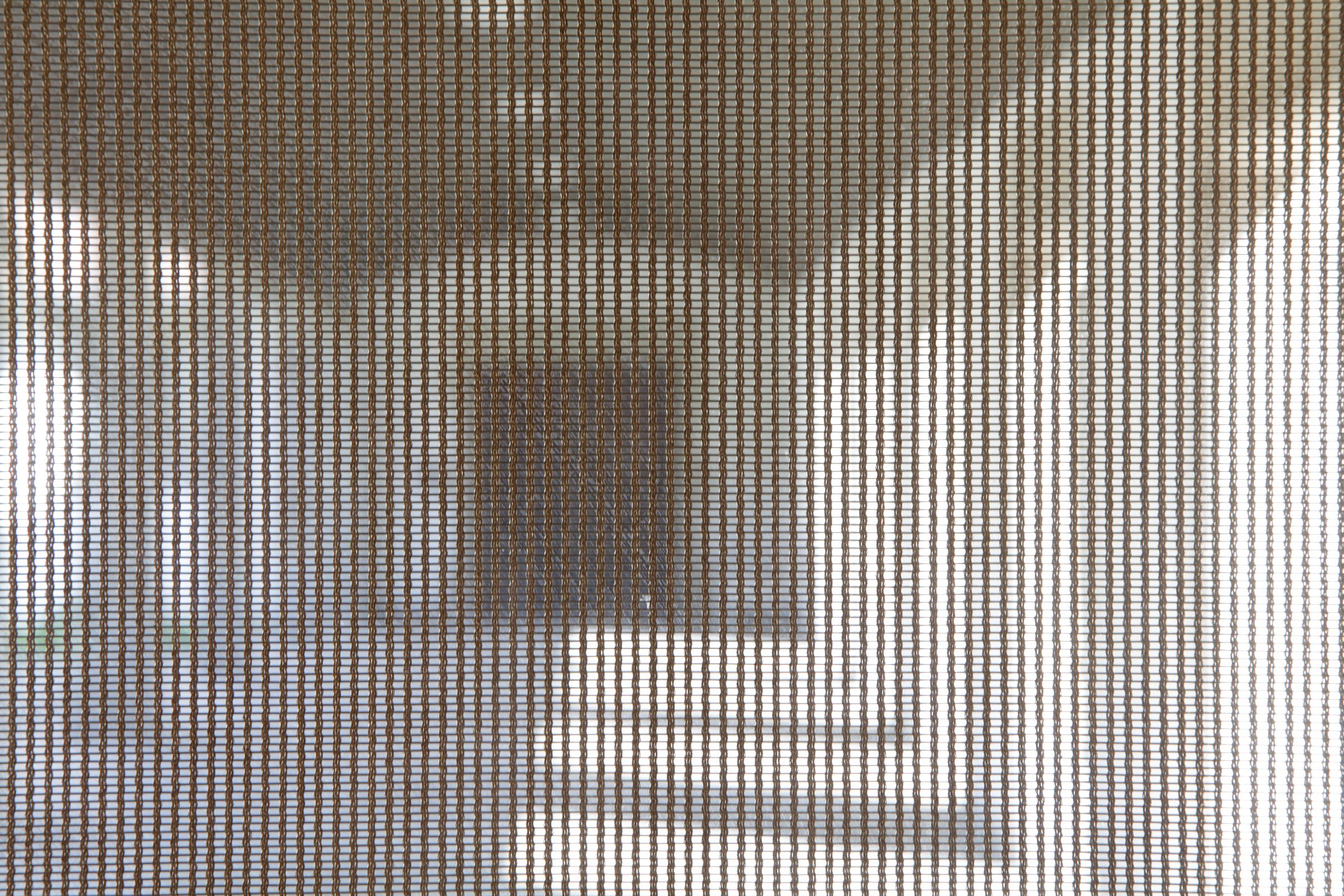
- Woven brass mesh, fine cord weave
- Max panel
- 61" × 137"
- SHGC
- .09 - .31 (sun angle)
- U-value
- .26 air
- Pricing
- $140 / sf
Mandarin, Kiwi, Aluminum, or Copper mesh sealed inside the IGU cavity, delivering directional solar control, partial vision, and the architectural texture of woven or expanded metal, with no exterior maintenance ever required. Available up to 78 by 157 inches.
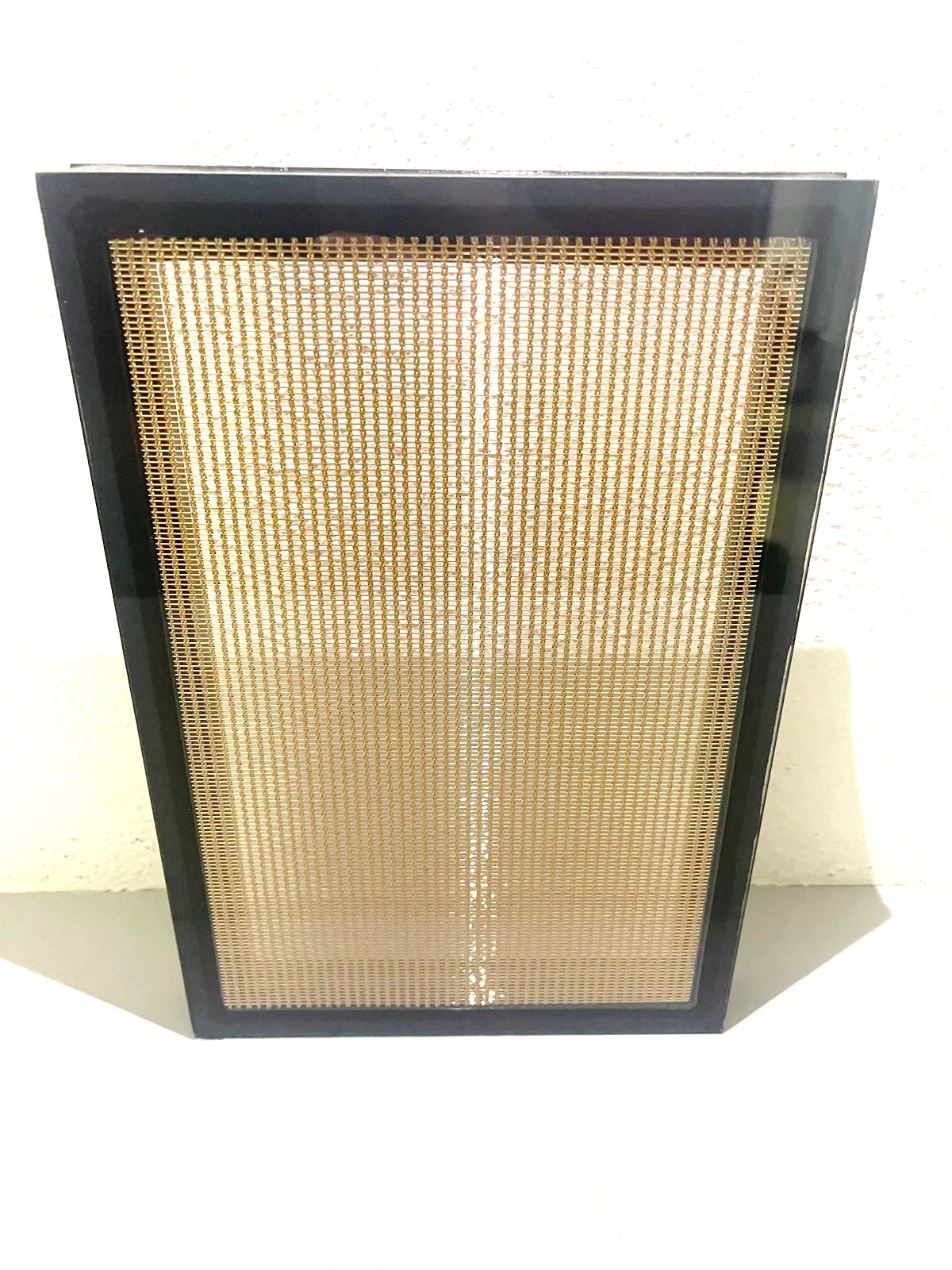
OKATECH seals expanded or woven metal mesh inside the hermetically sealed cavity of an insulating glass unit. The mesh never contacts air, weather, or UV directly. Pattern density and finish are selected to redirect direct solar radiation while transmitting diffuse daylight, a passive shading system with the architectural character of textile-scale metalwork.
Mandarin (woven brass), Kiwi (woven steel), Aluminum and Copper (expanded metal) are each sealed in the same insulating glass construction with the same framing envelope and thermal performance. Finish choice is an architectural decision about tone, transparency, and how the mesh reads against the surrounding facade material.
Mesh density and angle block direct solar radiation as the sun moves across the facade. SHGC ranges from 9 to 31 percent depending on sun angle and panel orientation. No motorized components. No maintenance cycle. The mesh works passively for the life of the building.
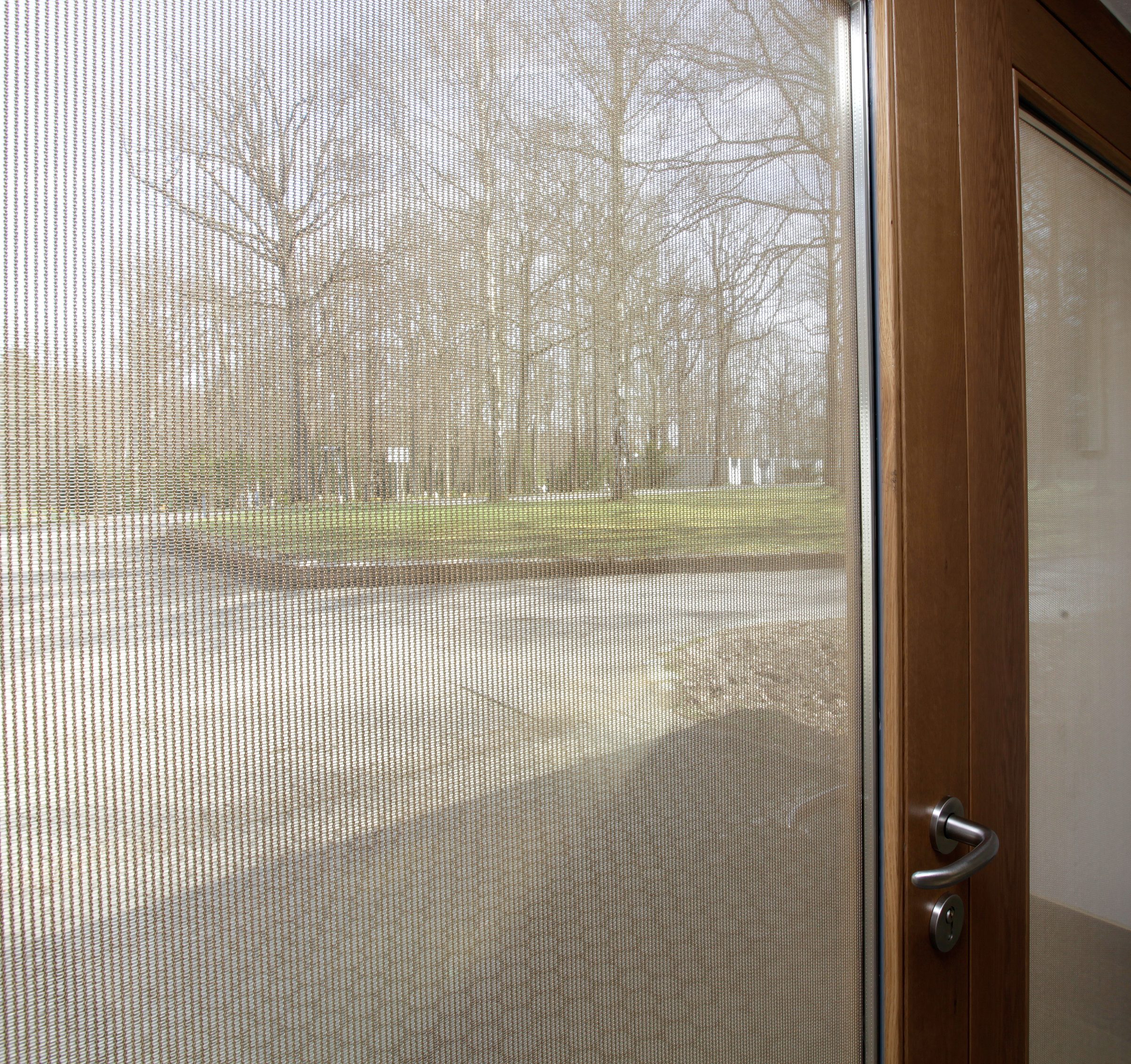
From the exterior, OKATECH reads as a metallic textile. From the interior, diffuse daylight enters and silhouettes of the exterior world remain faintly visible. Privacy is asymmetric: much harder to see in from outside than out from inside, a quality useful in embassy, civic, and institutional applications.
The mesh is precision-set and fitted inside the sealed IGU cavity during fabrication. It never contacts outdoor air, humidity, or UV radiation directly. No painting, coating, or replacement is required for the life of the unit, unlike any exterior metal cladding system. The factory-sealed cavity also functions as the argon or krypton fill chamber for thermal performance.
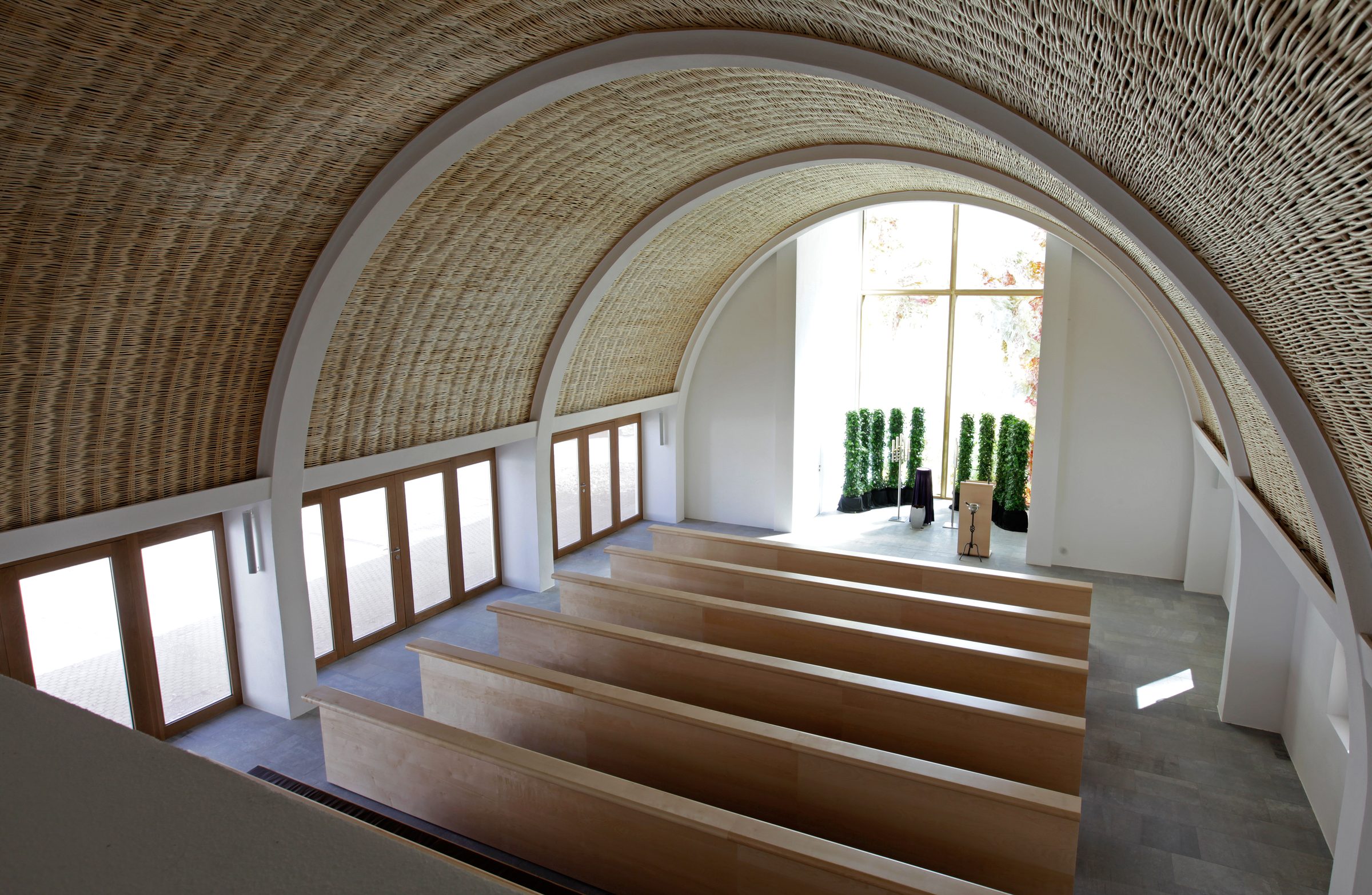
Daylight filtering through OKATECH takes on the warm tone of the brass mesh in Mandarin, the cooler tone of steel in Kiwi, or the metallic shimmer of expanded aluminum and copper. The pattern of the mesh drifts across interior surfaces through the day. At Aussegnungshalle Waldfriedhof in Aalen, mourners experience daylight that is bright but never harsh, softened and patterned by the mesh inside the glass.
Mandarin, Kiwi, Aluminum, and Copper are each enclosed in the same insulating glass construction with the same framing envelope and thermal performance. Finish choice is an architectural decision about tone, transparency, and how the mesh reads against the surrounding facade material.
Additional finishes available by inquiry: Lamelle, Sambesi 450, Omega 1520, Anodized aluminum, Duraflon Copper. SHGC and U-values above are reference figures from OKALUX published data. Project-specific values vary with mesh density and IGU build-up.
All four OKATECH finishes share the same IGU construction, framing envelope, and thermal performance range. Finish selection is an architectural decision about tone, texture, and transparency, not a performance tradeoff.
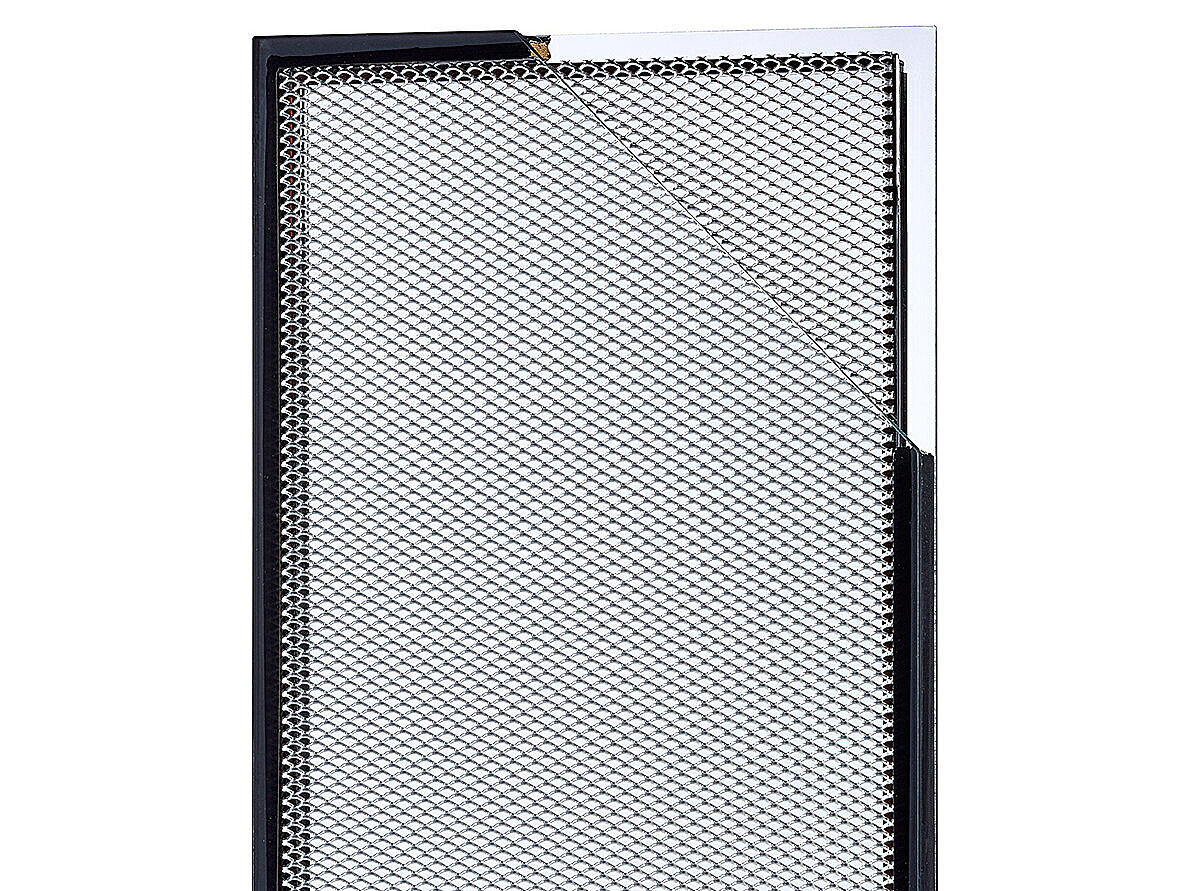
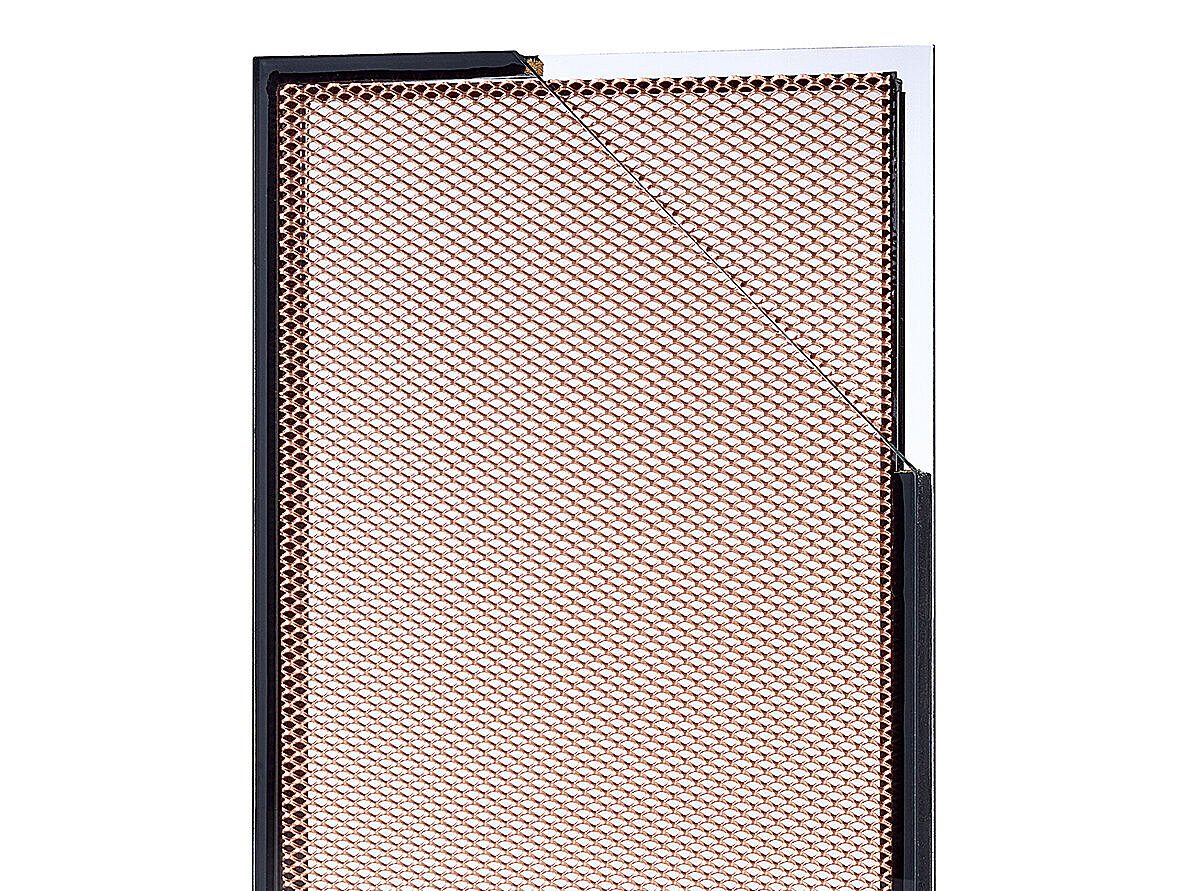
OKATECH is specified where solar control needs to be visible: an embassy facade, a civic envelope, a contemplative interior, a cultural building where the mesh itself is the architectural gesture. Maintenance-free for the building life.
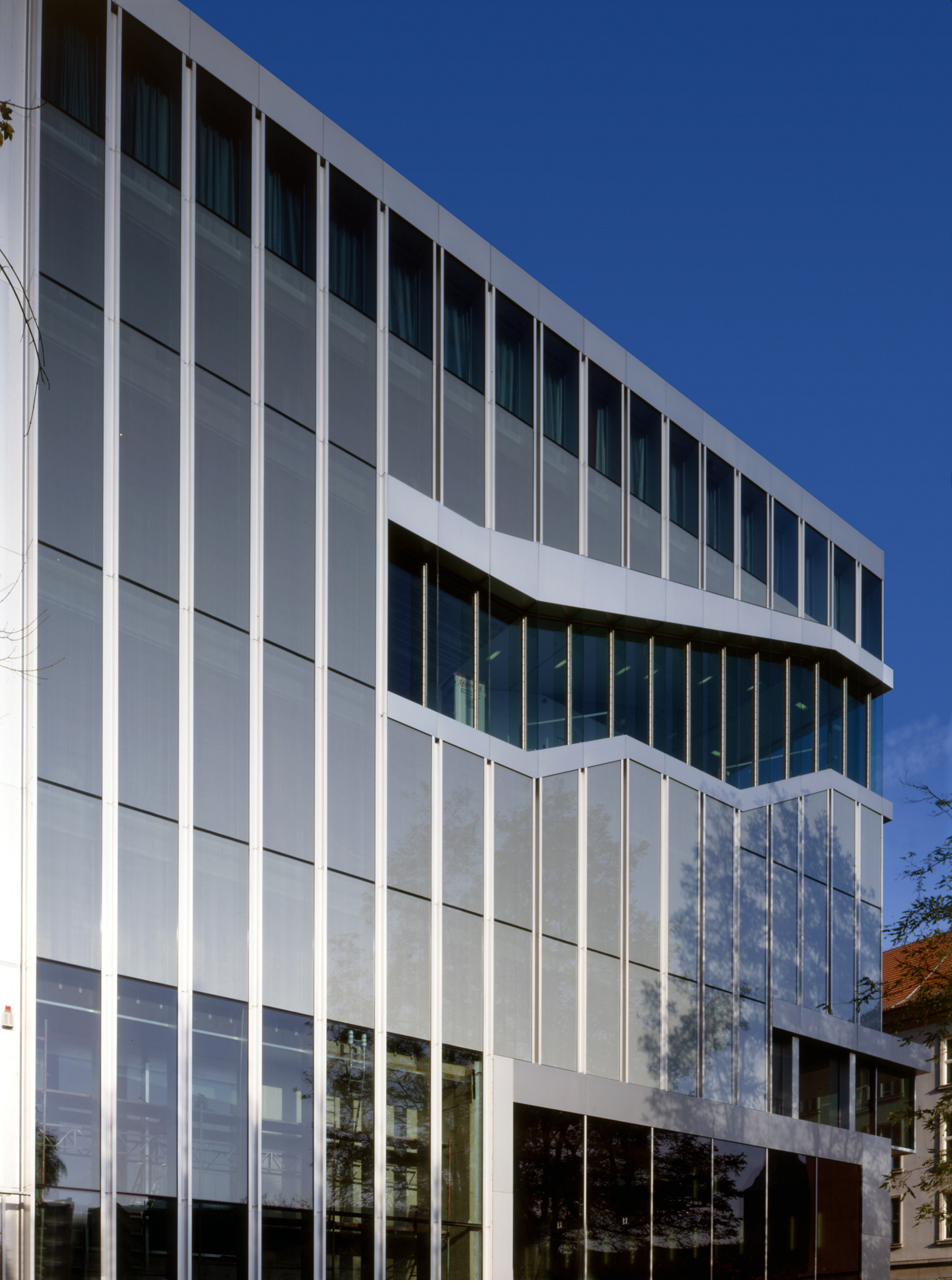
Embassy and civic buildings benefit from OKATECH's combination of solar control, partial through-vision, and the visual presence of metal as a material. The mesh humanizes large-area glazing while the sealed cavity removes any maintenance commitment. Niederländische Botschaft, OMA, Berlin.
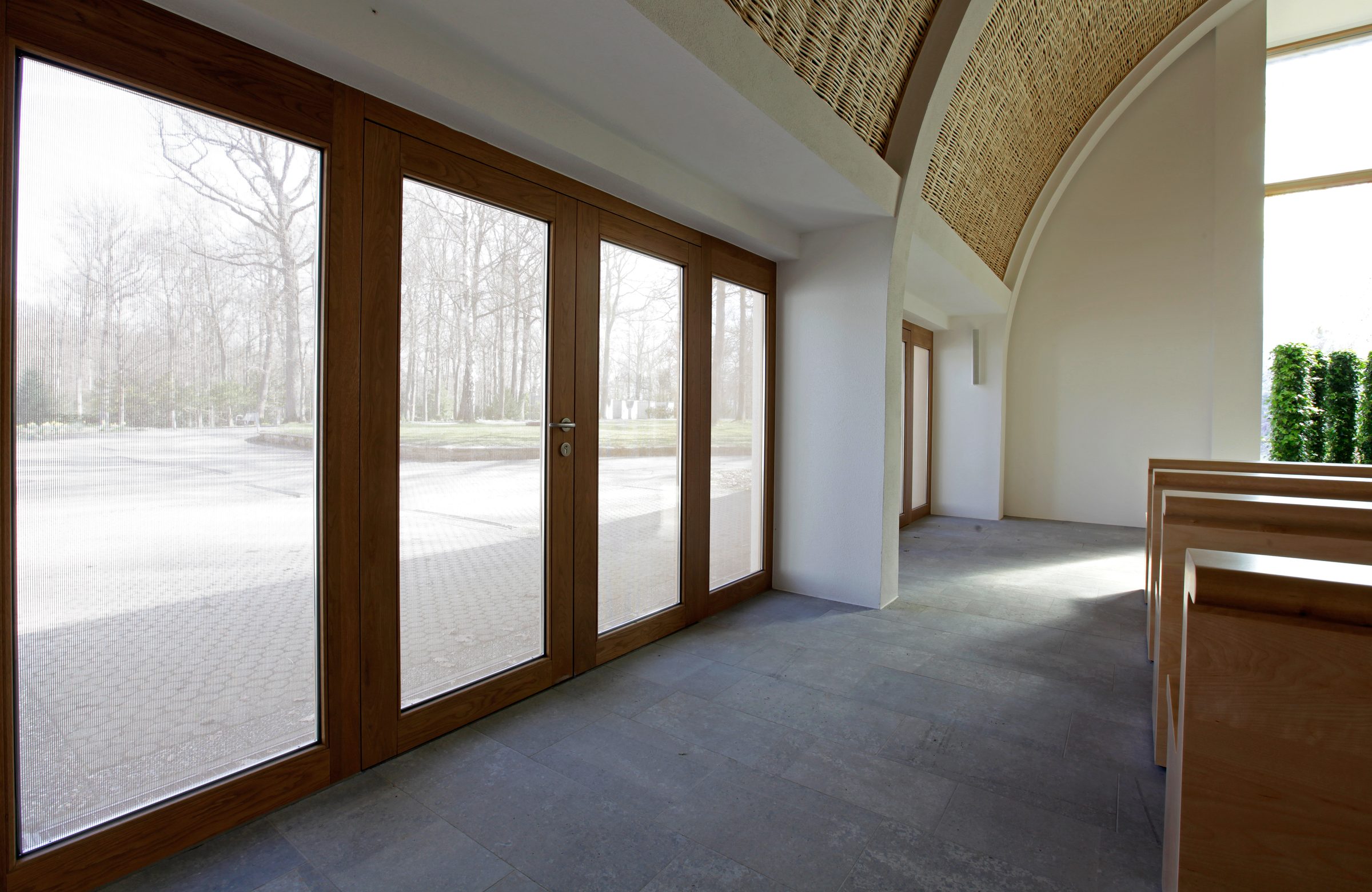
Funerary, sacred, and meditation spaces specified with OKATECH Mandarin achieve filtered daylight without exterior shading devices or operable components. Aussegnungshalle Waldfriedhof in Aalen uses Mandarin in the side-aisle glazing to soften daylight across the chapel interior.
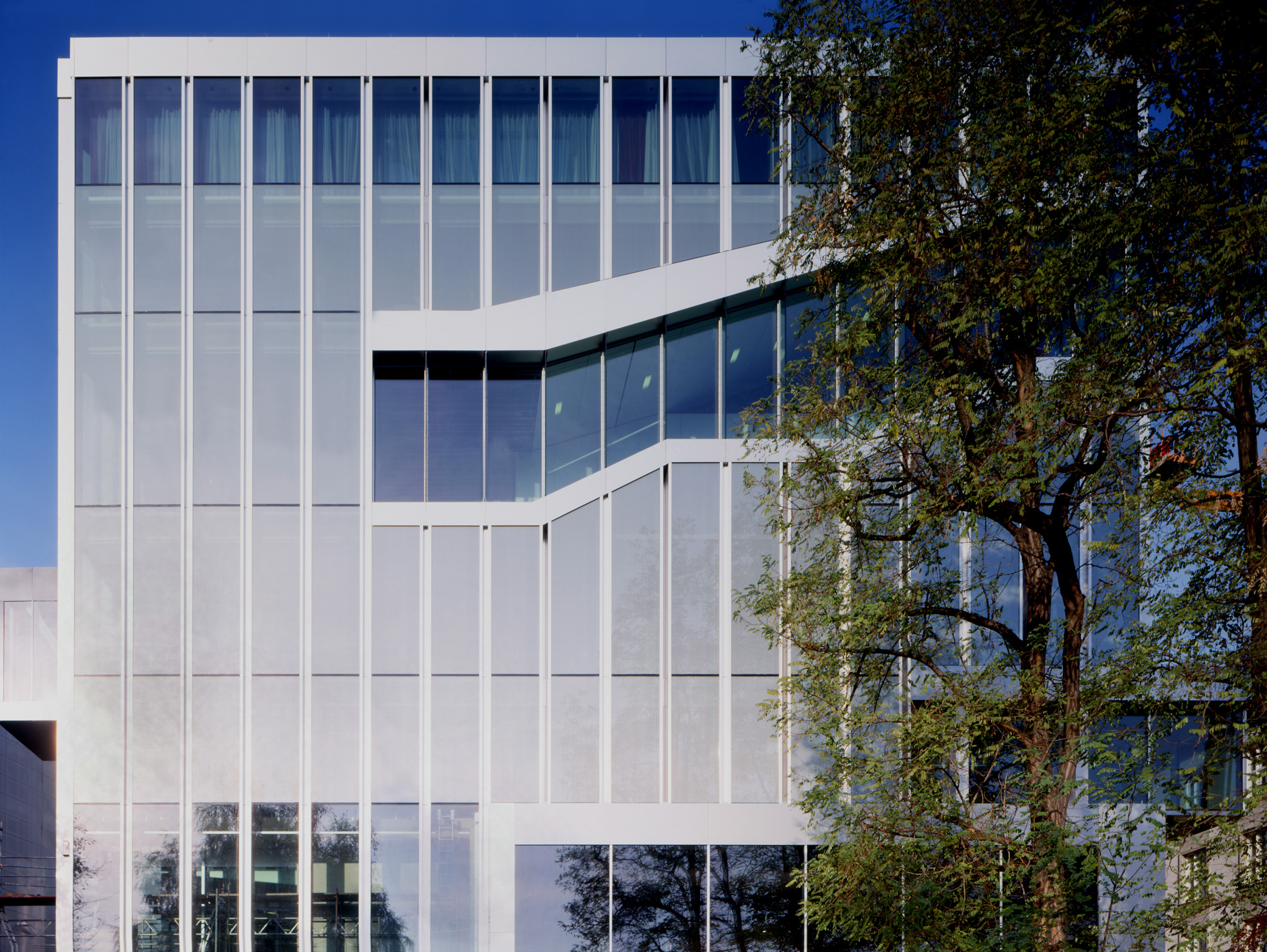
Cultural buildings, museums, and mid-rise institutional facades use OKATECH Kiwi or Mandarin where the mesh is intended to read as the building's primary material. Direct solar control without curtainwall framing complexity.
Verified OKATECH installations across civic, cultural, and contemplative typologies. Imagery via OKALUX product library.
Dutch embassy on Klingelhöferstrasse with OKATECH on the primary facade. The fine vertical mesh reads as a metallic textile against the surrounding diplomatic quarter, partial through-vision from inside, full privacy screening from outside. OMA.
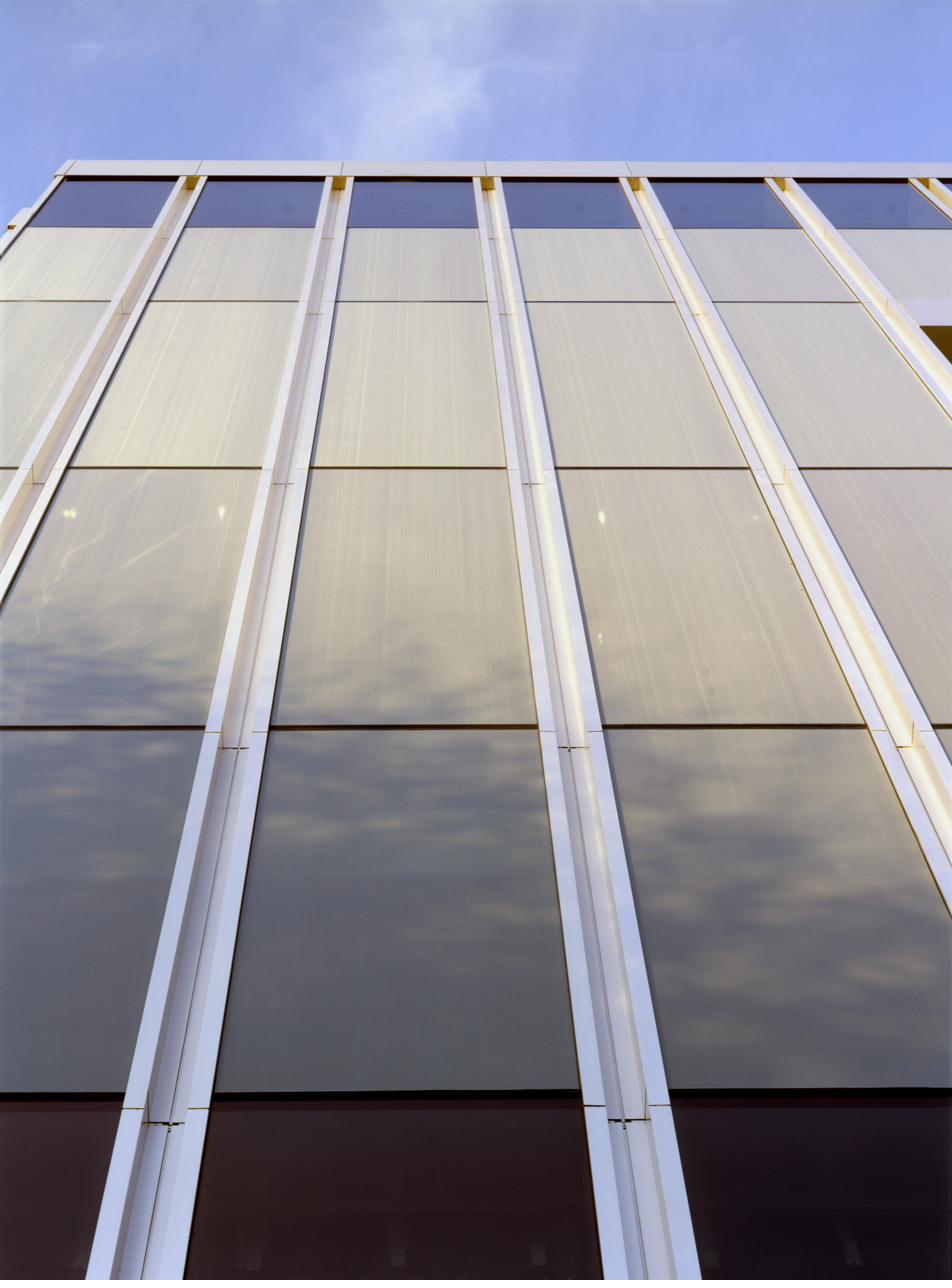
Worm's-eye view of the embassy facade showing the OKATECH mesh panels and framing system in close detail. The vertical mesh reads as a metallic textile at building scale.
Cemetery chapel in Aalen with OKATECH Mandarin in the side-aisle and entry-door glazing. The brass mesh softens daylight across the chapel without darkening the interior.
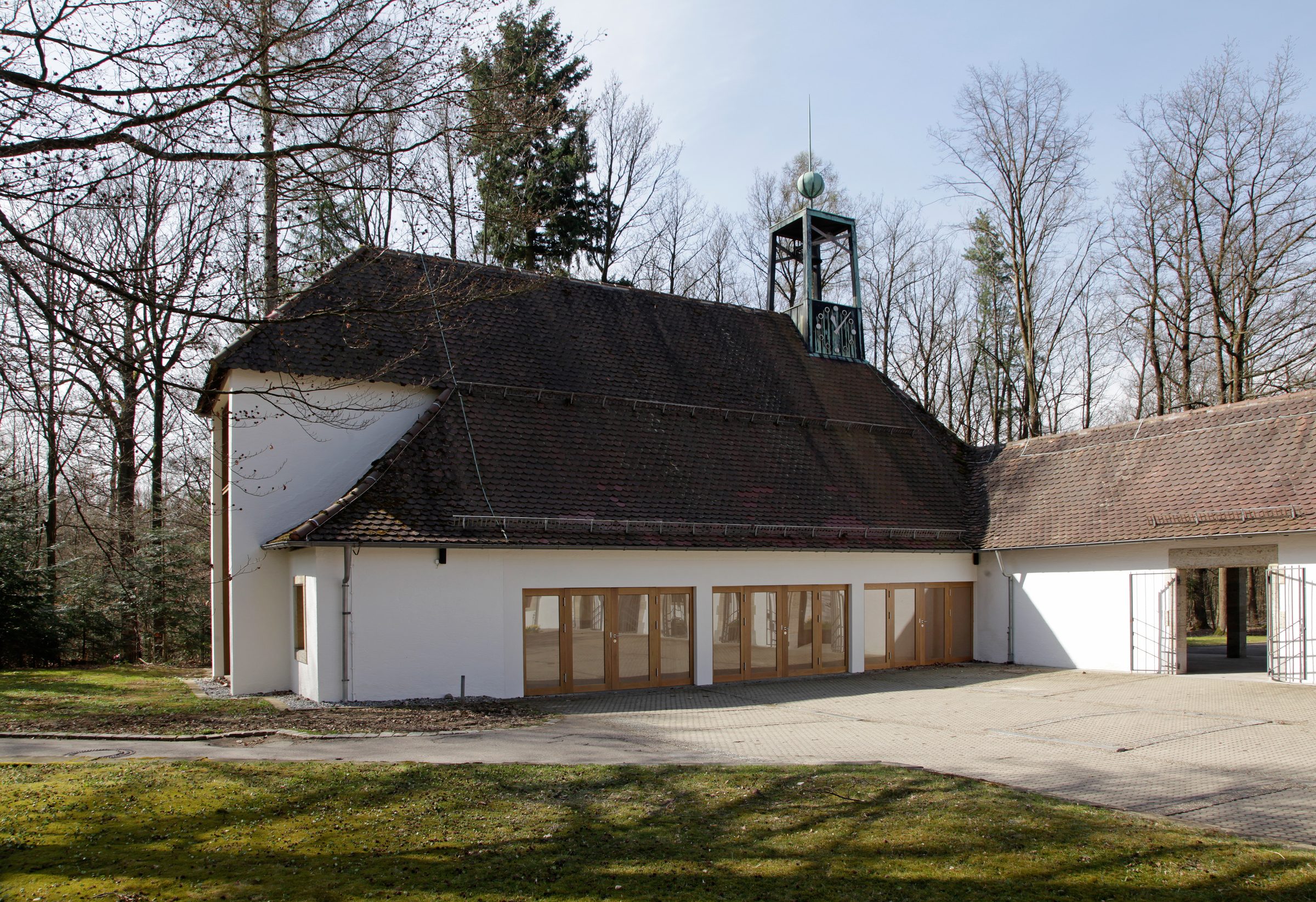
Forested cemetery site, with OKATECH Mandarin in the lower fenestration and entry doors. Aalen, Germany.
OKATECH is optimized for vertical facade applications. For overhead and non-standard orientation inquiries, contact R. Suare. SHGC and U-values above are reference figures from OKALUX published data. Project-specific values vary with mesh density and IGU build-up.
OKATECH fits standard curtainwall and storefront framing systems. The metal mesh adds no significant frame depth beyond a conventional double-pane unit. Consult R. Suare for project-specific framing coordination and maximum span confirmation.
OKATECH is optimized for vertical facade applications. For overhead and non-standard orientation inquiries, contact R. Suare. SHGC and U-values above are reference figures from OKALUX published data. Project-specific values vary with mesh density and IGU build-up.
Brochure, technical data, and tender specification for OKATECH metal mesh, plus the OKATECH P shared brochure and technical data.
We'll send samples, finish-specific spec sheets, and a project-matched SHGC and Ug recommendation within two business days. For design-phase support, schedule a lunch and learn or send your solar study for review.